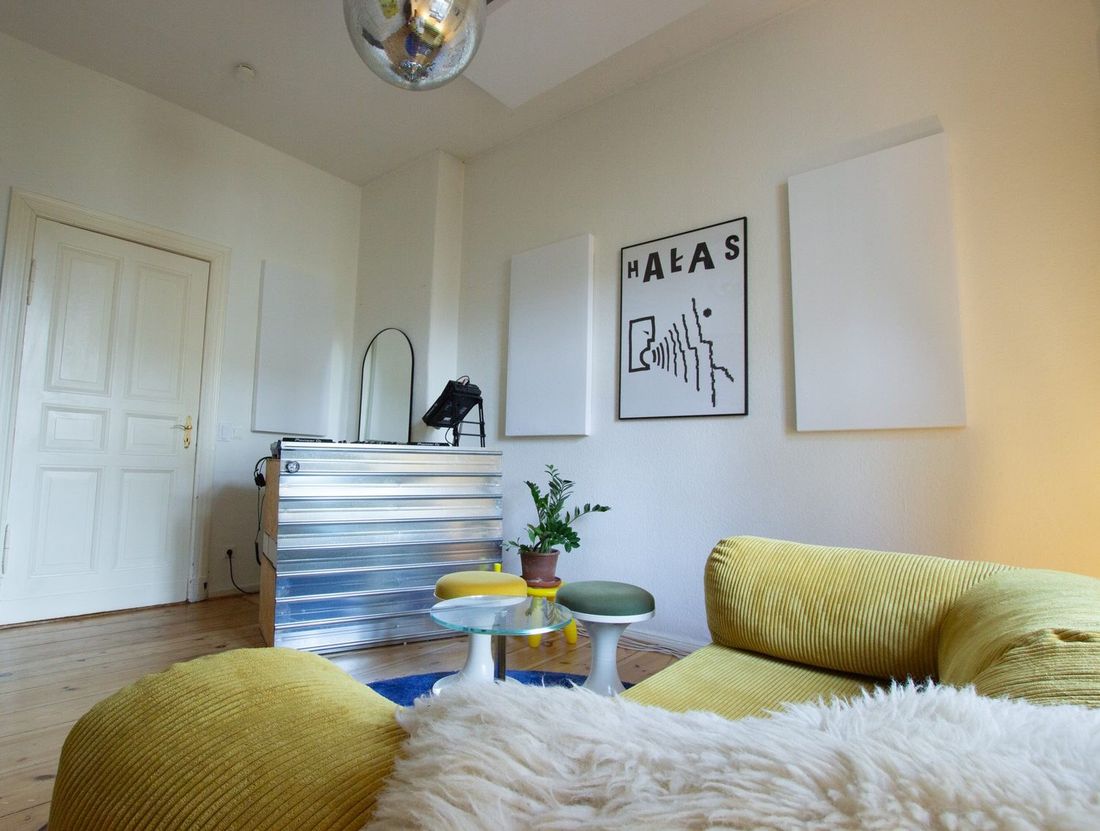
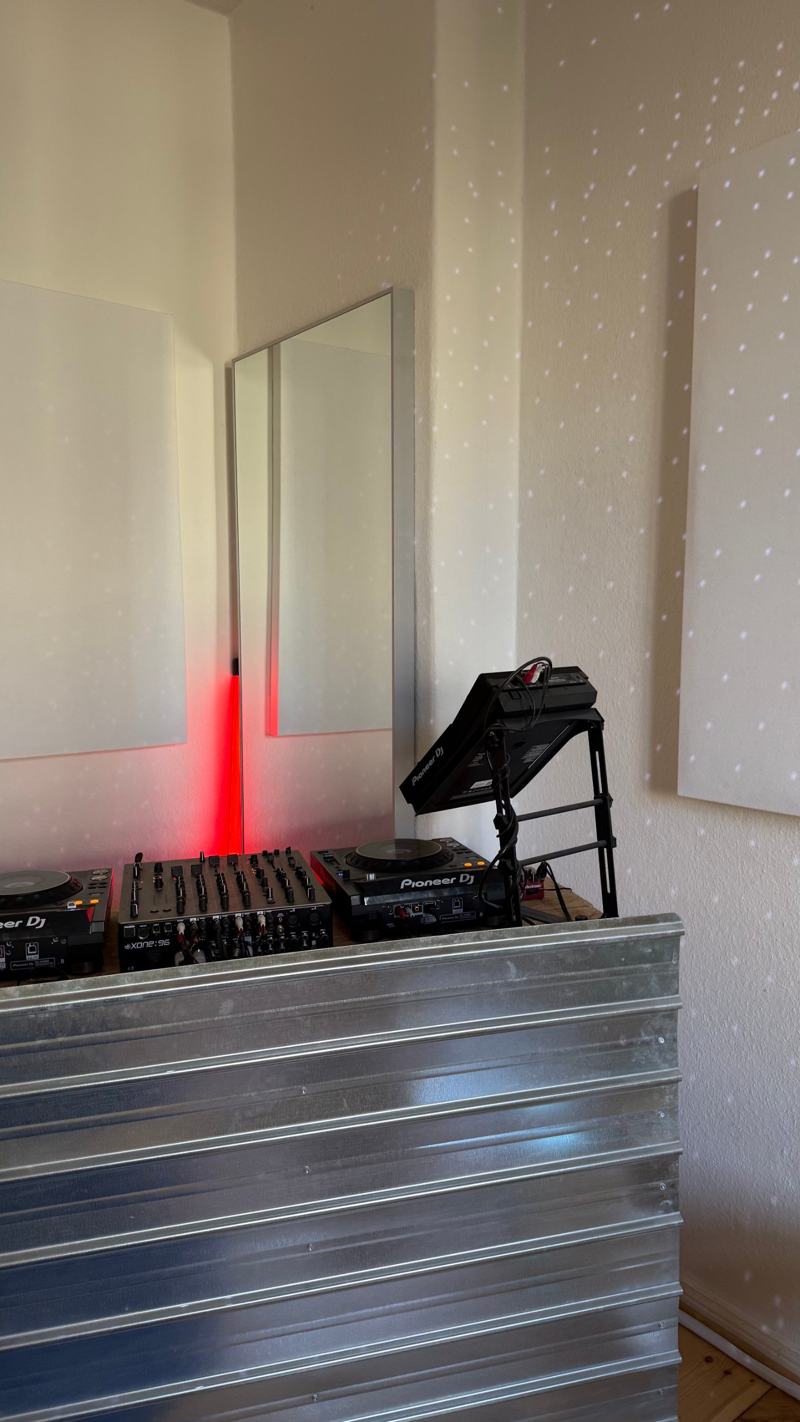
A steel booth, a mirror, a disco ball and a sofa you sink into. Possibly the smallest club in Berlin.
The room changes job when the sun goes down. That is the idea behind everything he builds: a space should do more than one thing, and it should make you want to touch it.
02
The red chair room
what
A room for sitting, working, plants and one dog
where
Berlin
his part
Concept, layout, furniture and the build
photos
some by @nicho.santini
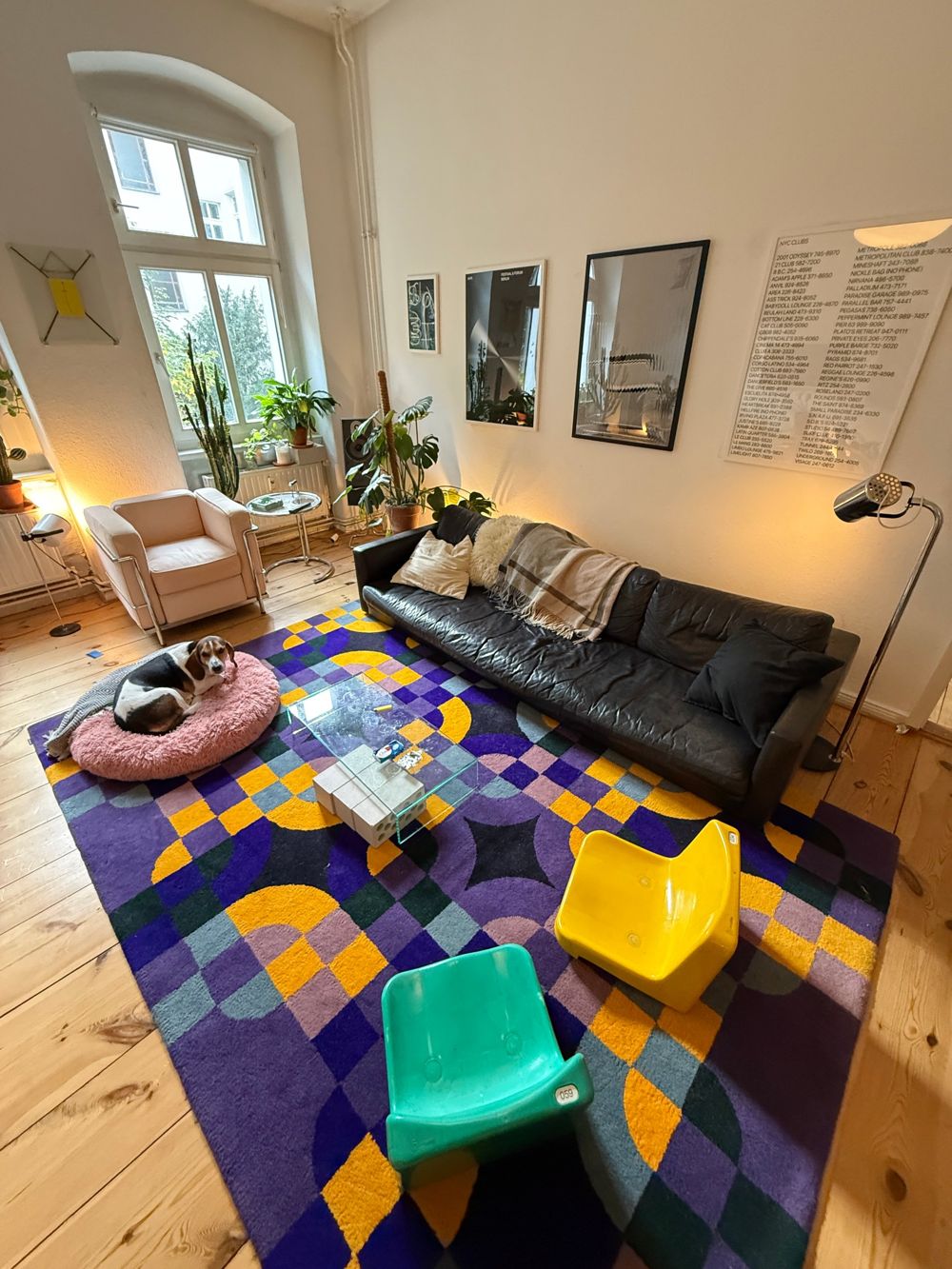
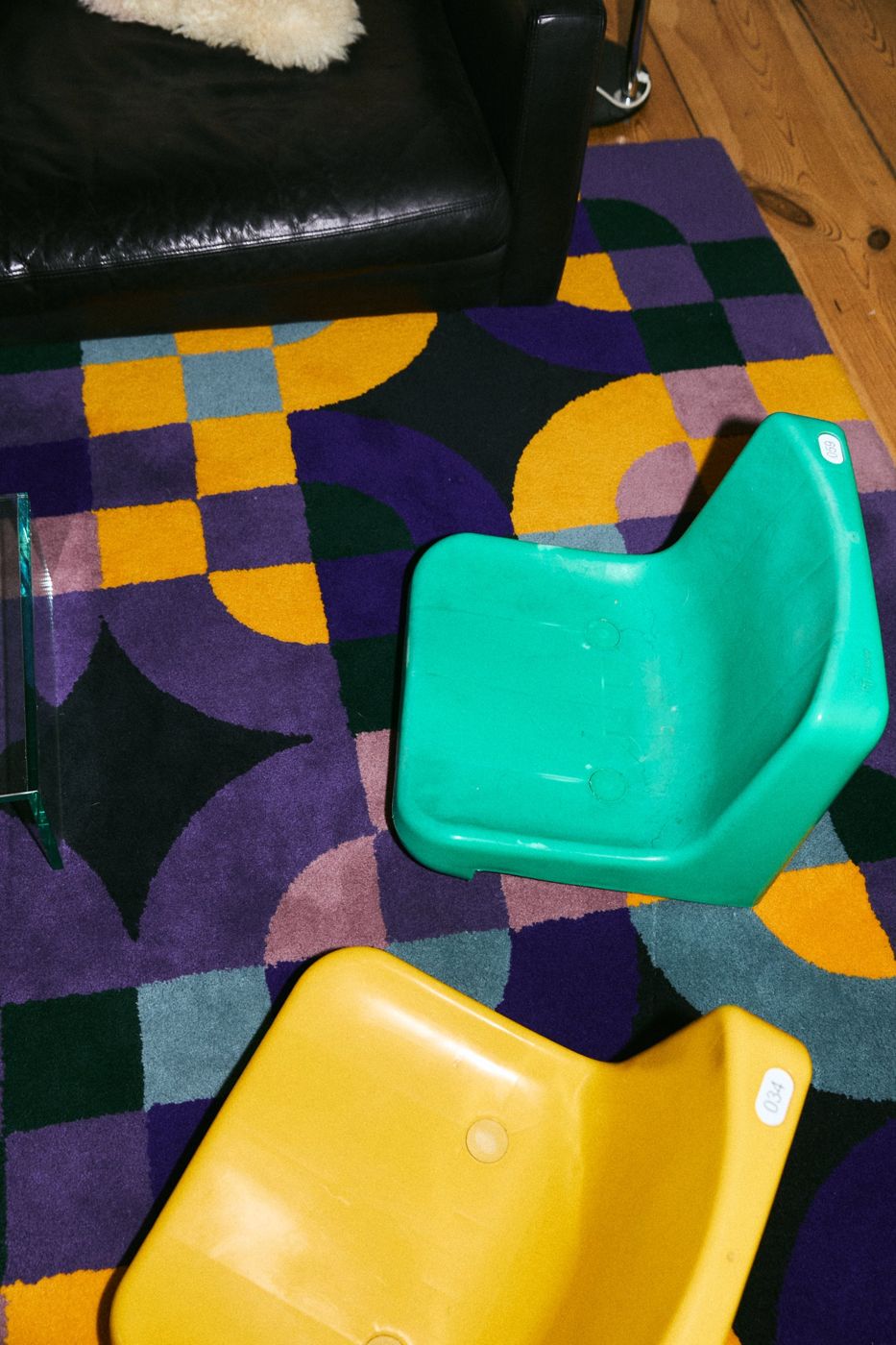
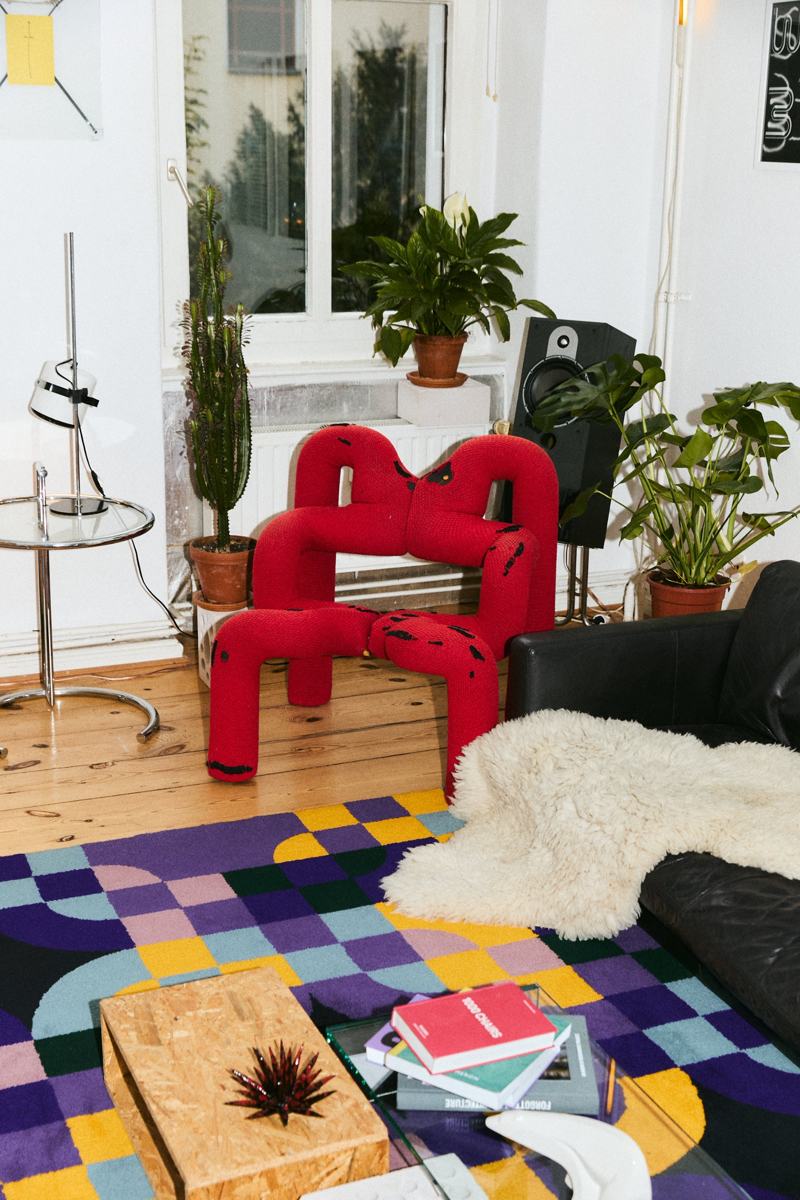
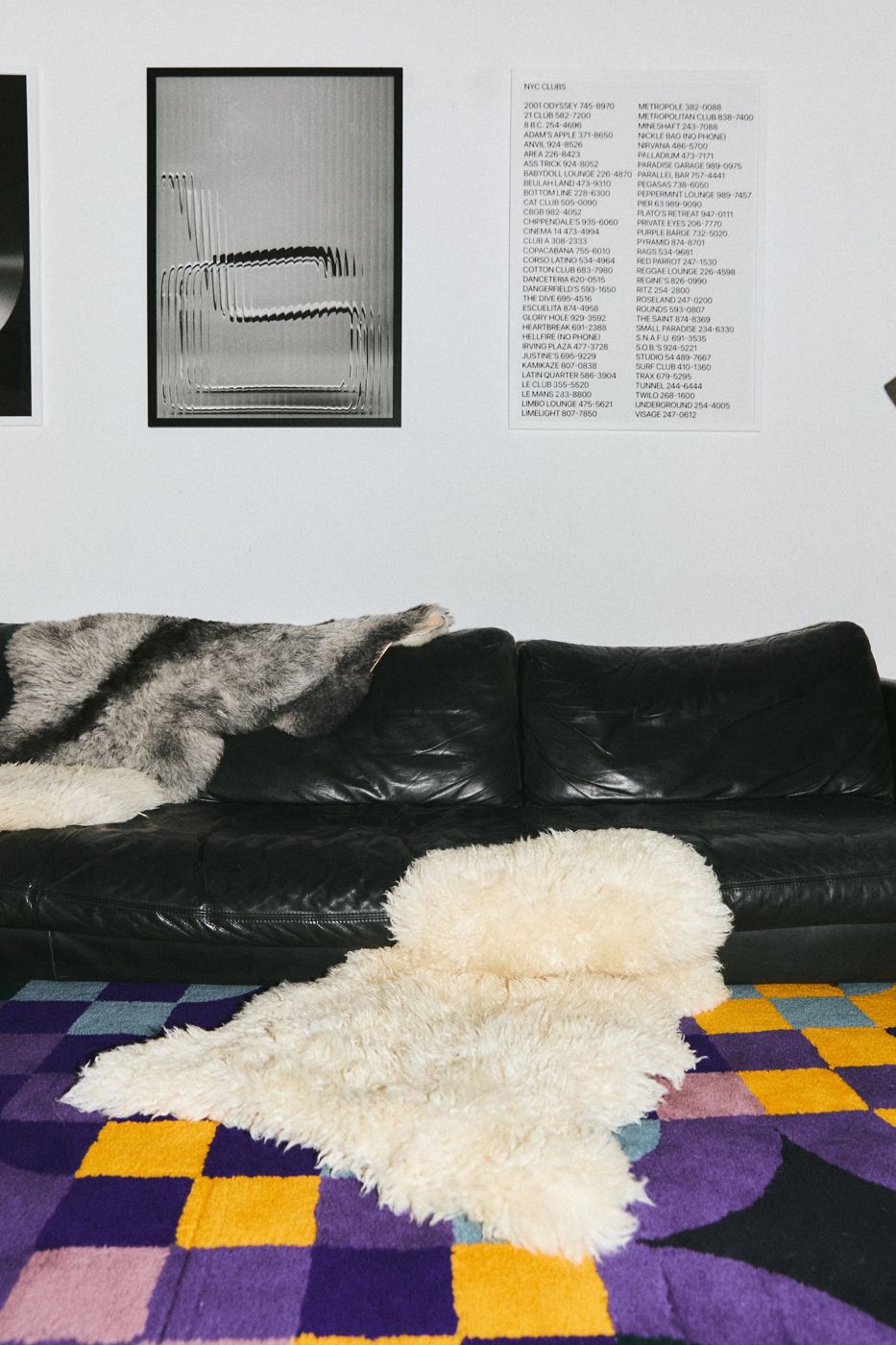
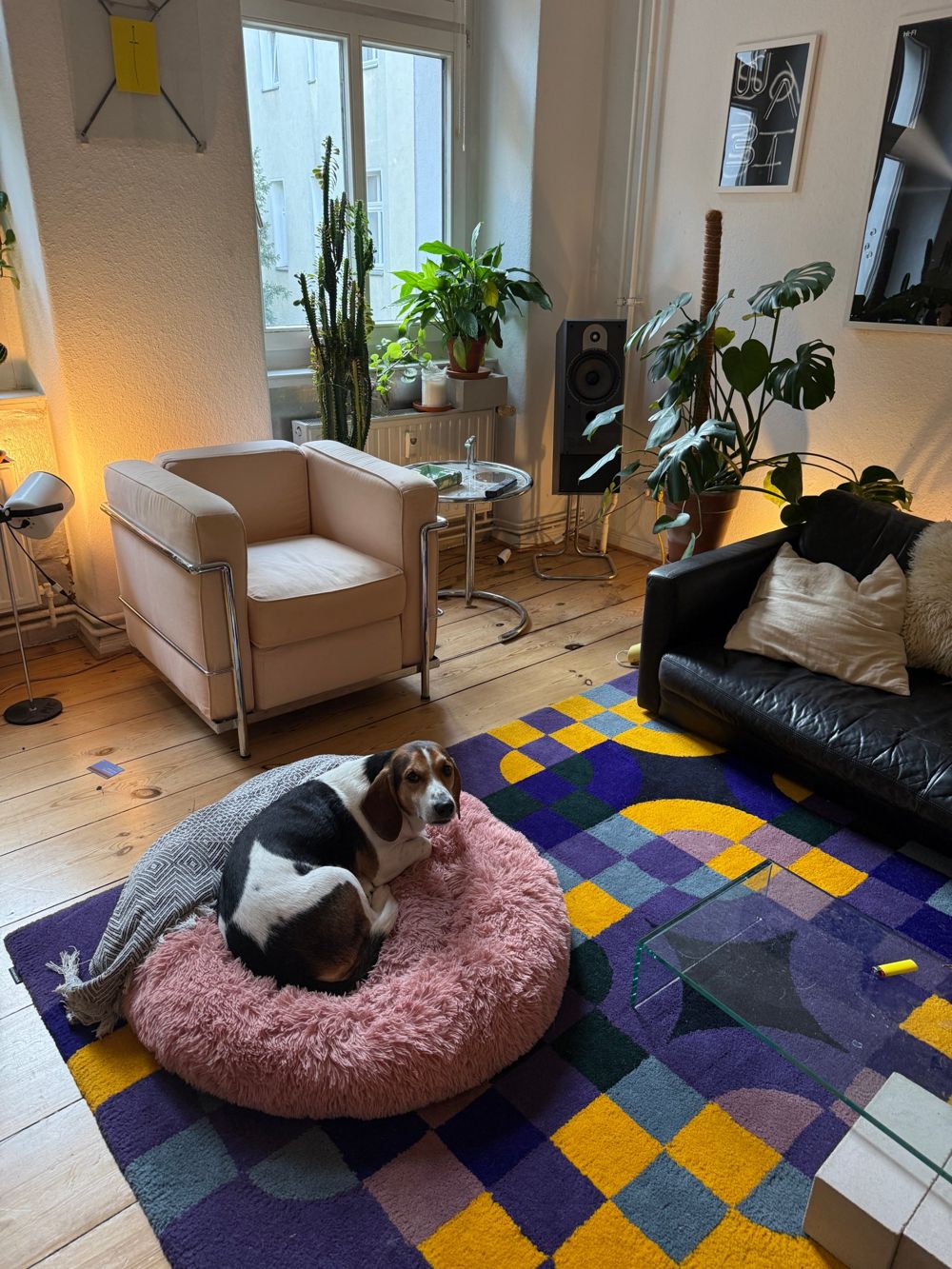
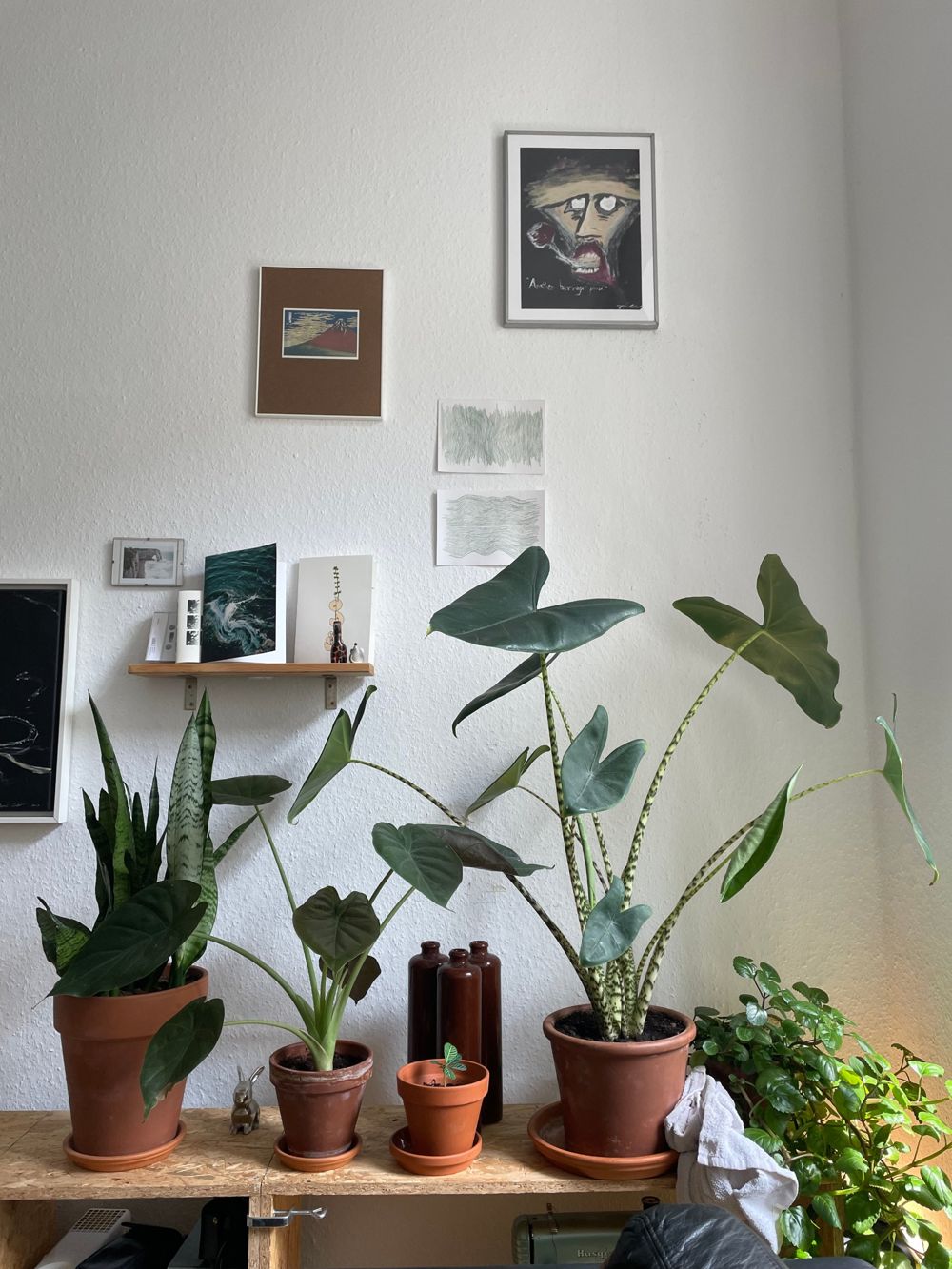
A rug like a board game, two stadium seats, a chair that looks like it is hugging itself, and plants that are slowly winning.
Nothing in it is fixed. The seats move, the table is glass on blocks, and the dog decides where the middle is.
03
After dark
what
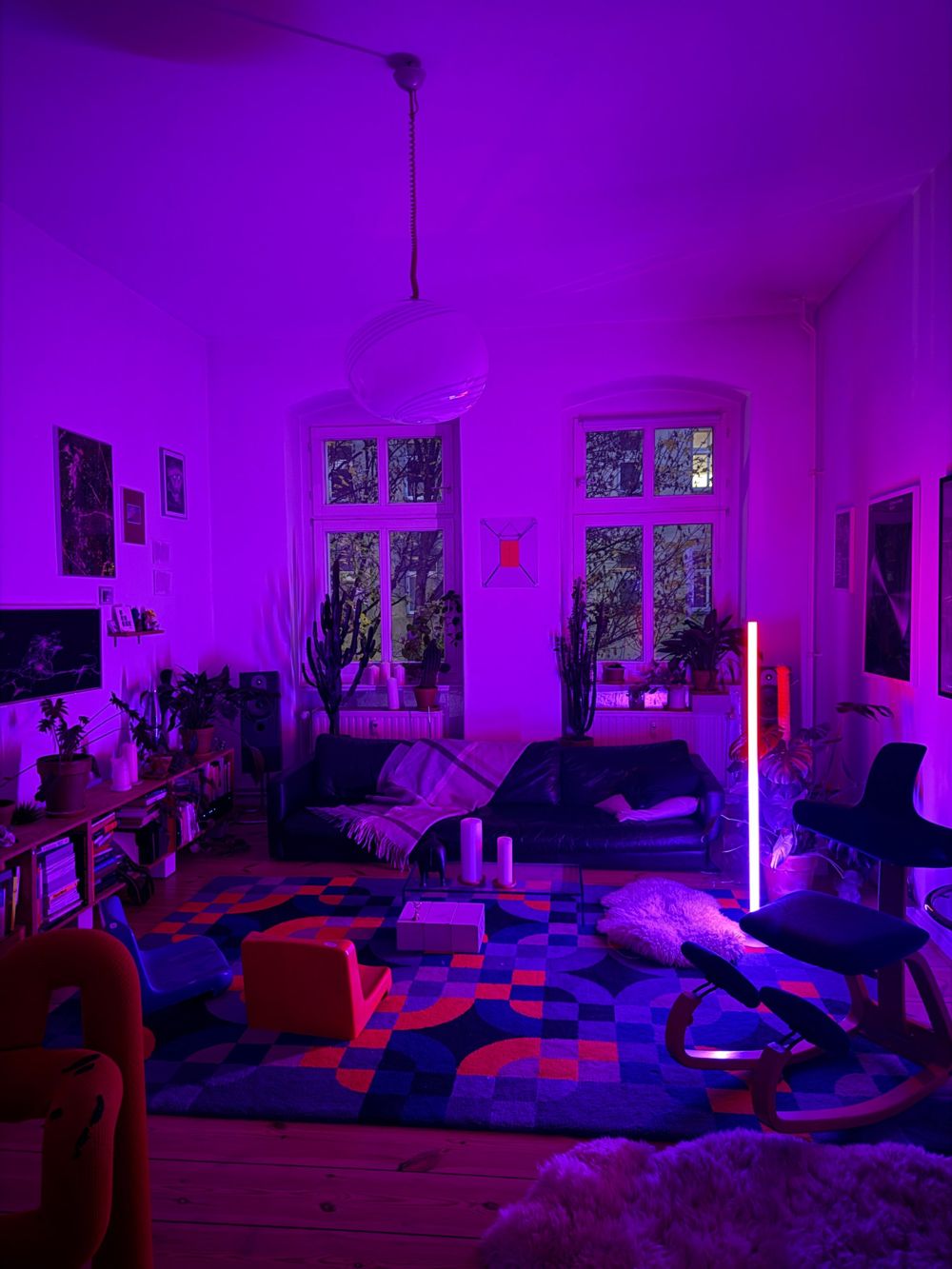
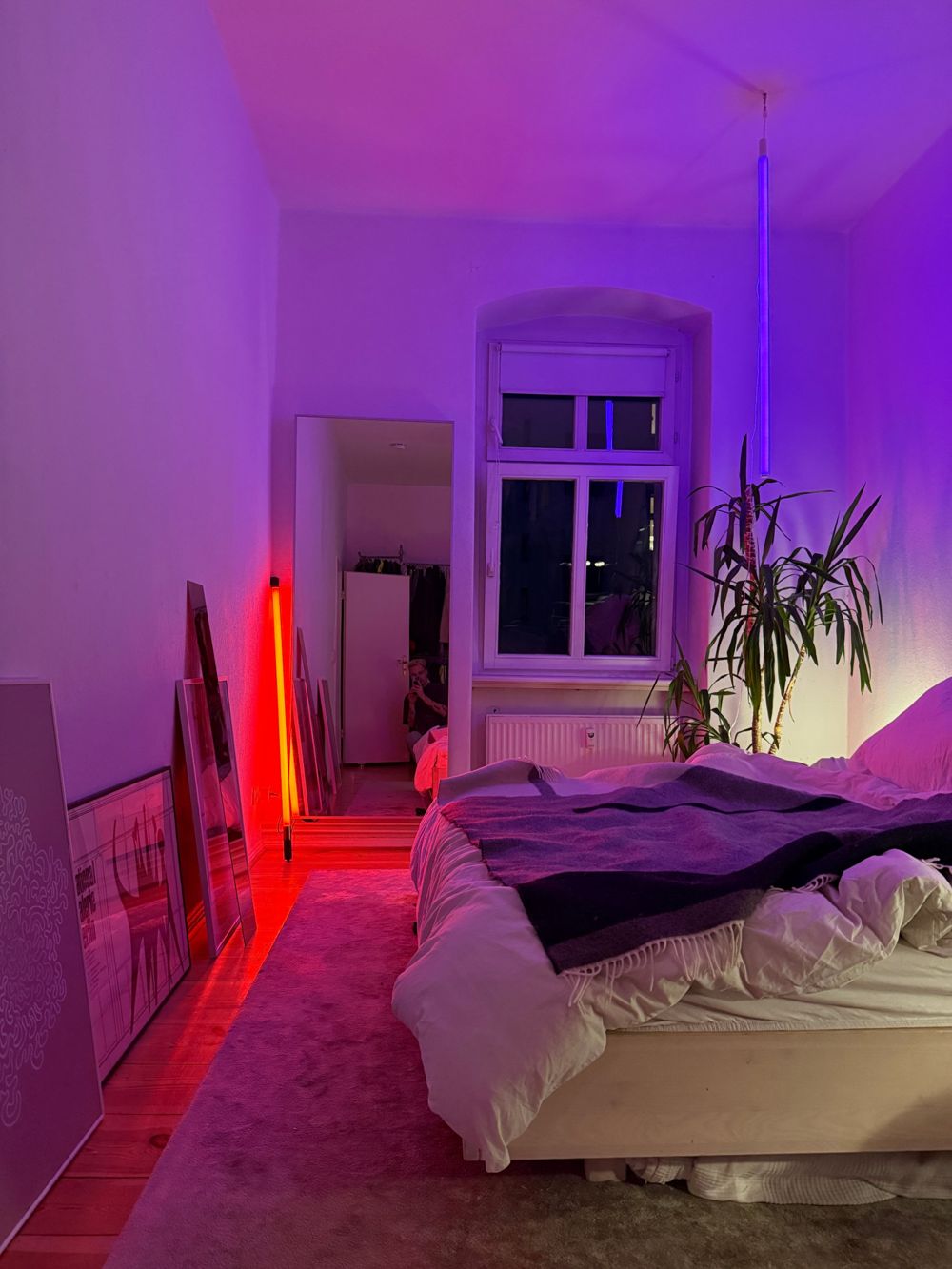
The same rooms, changed with nothing but light
where
Berlin
his part
Light and the smart home behind it
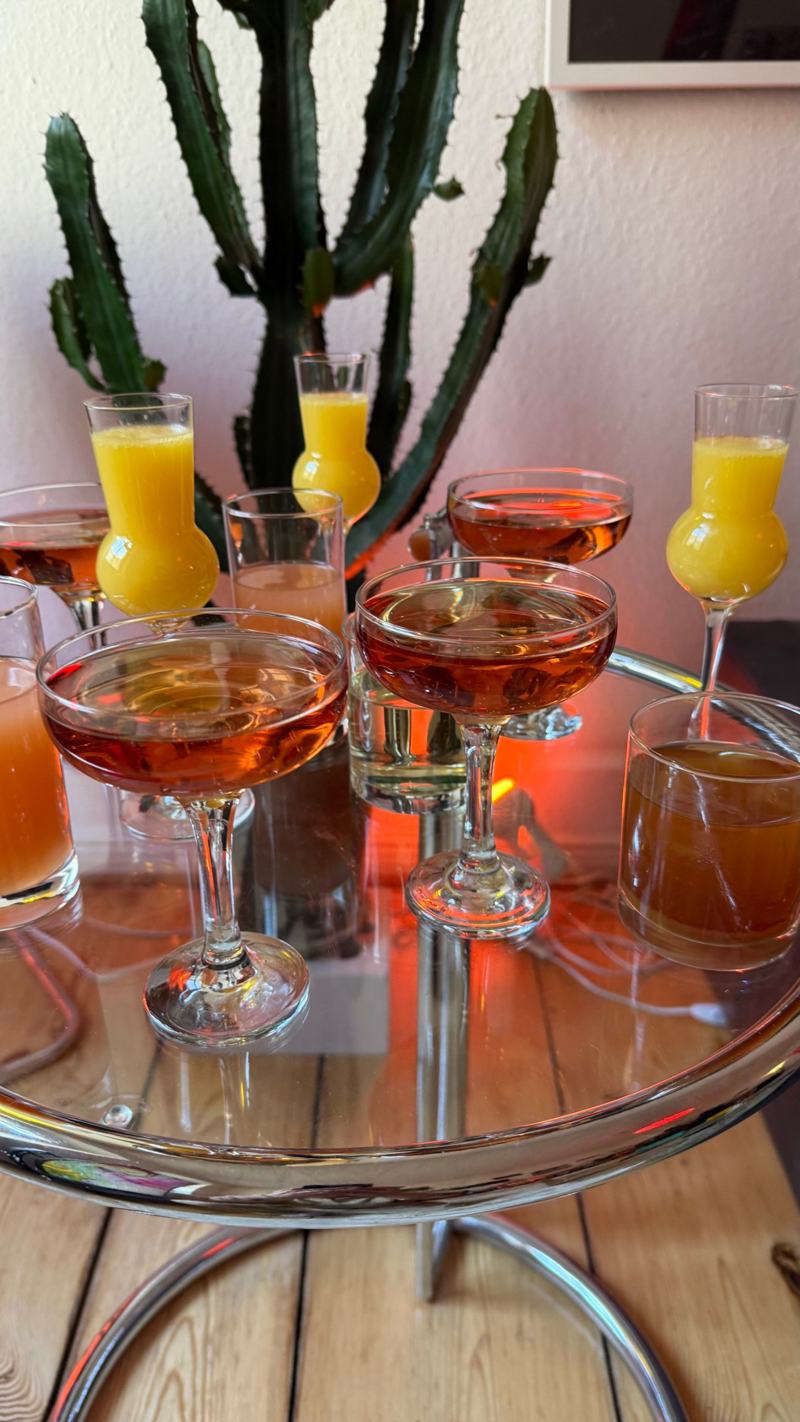
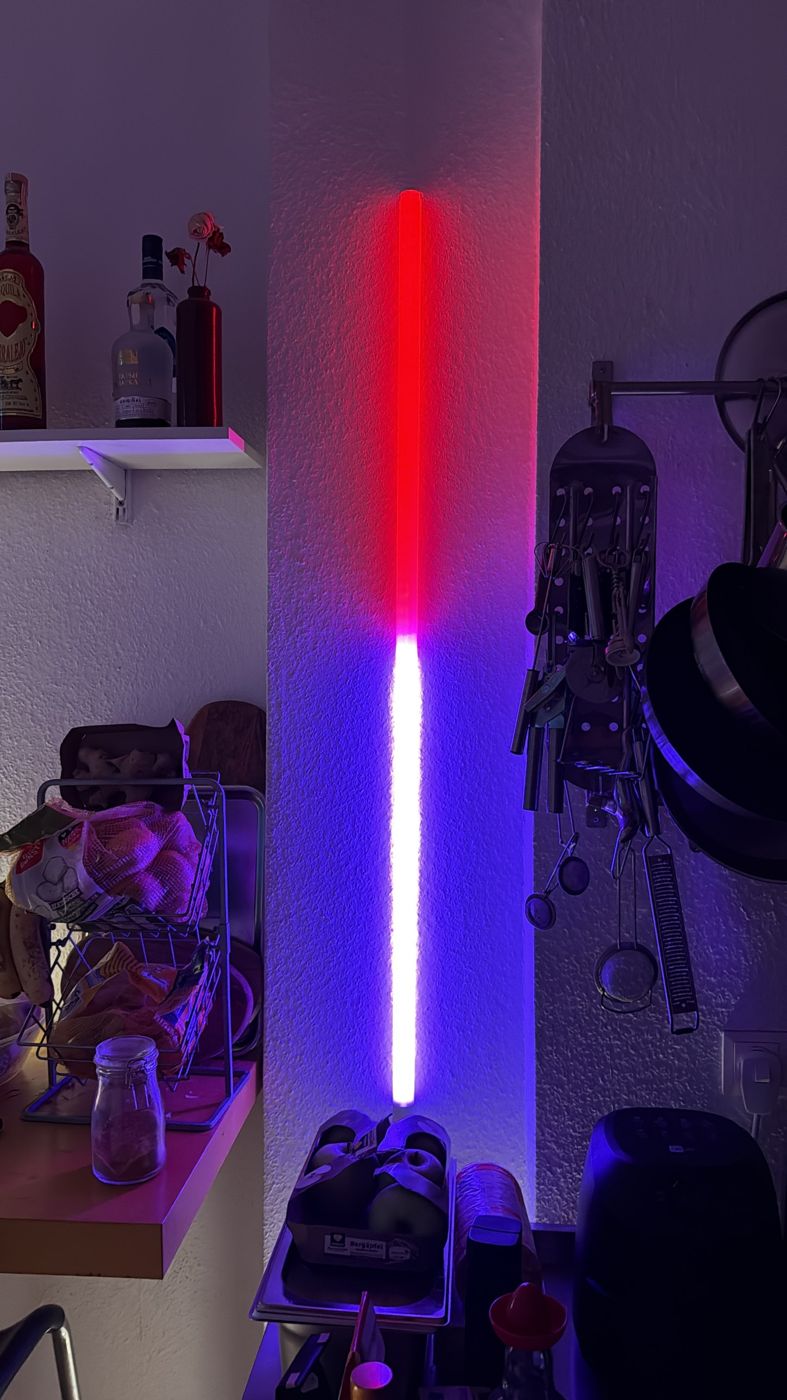
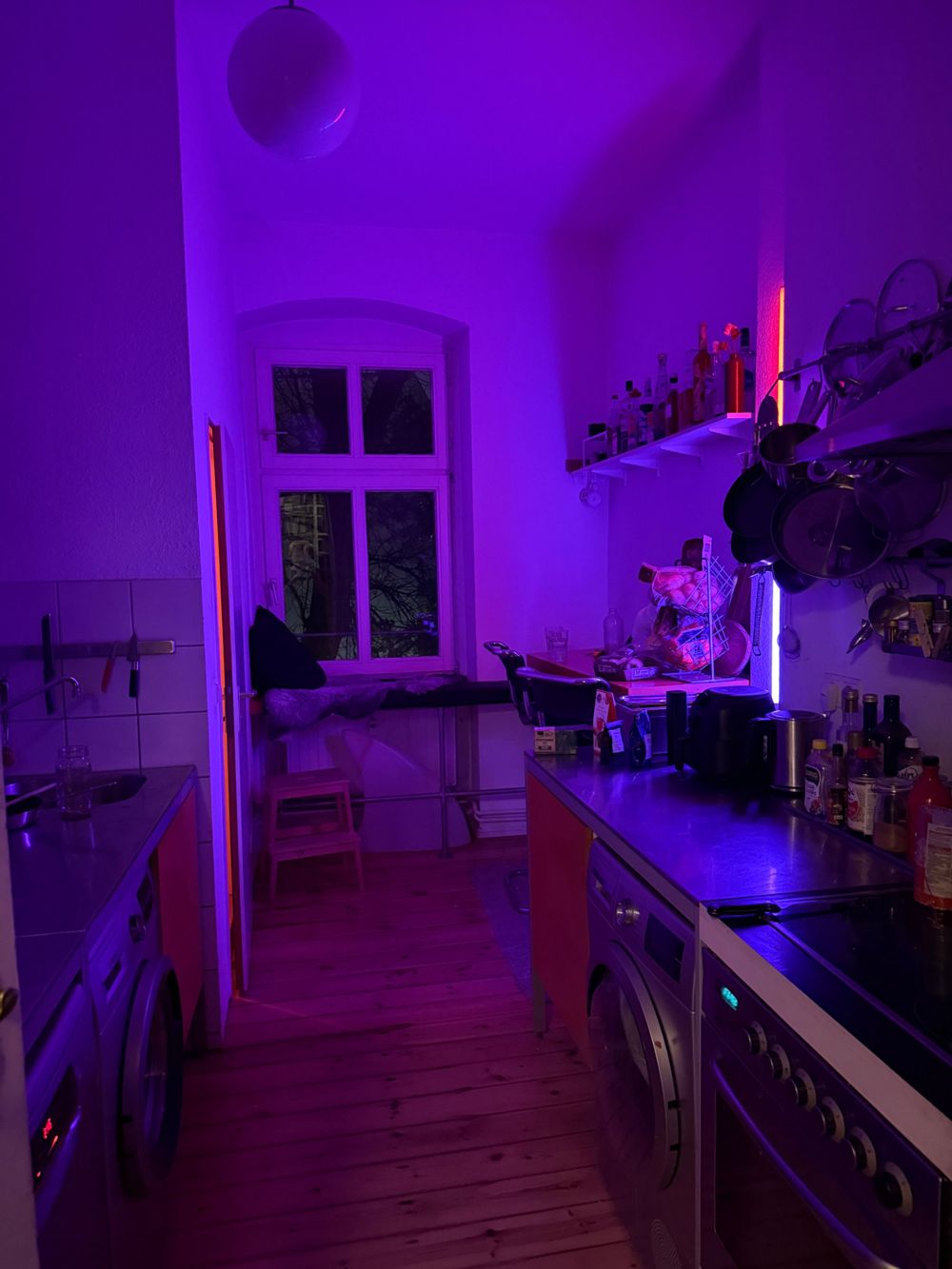
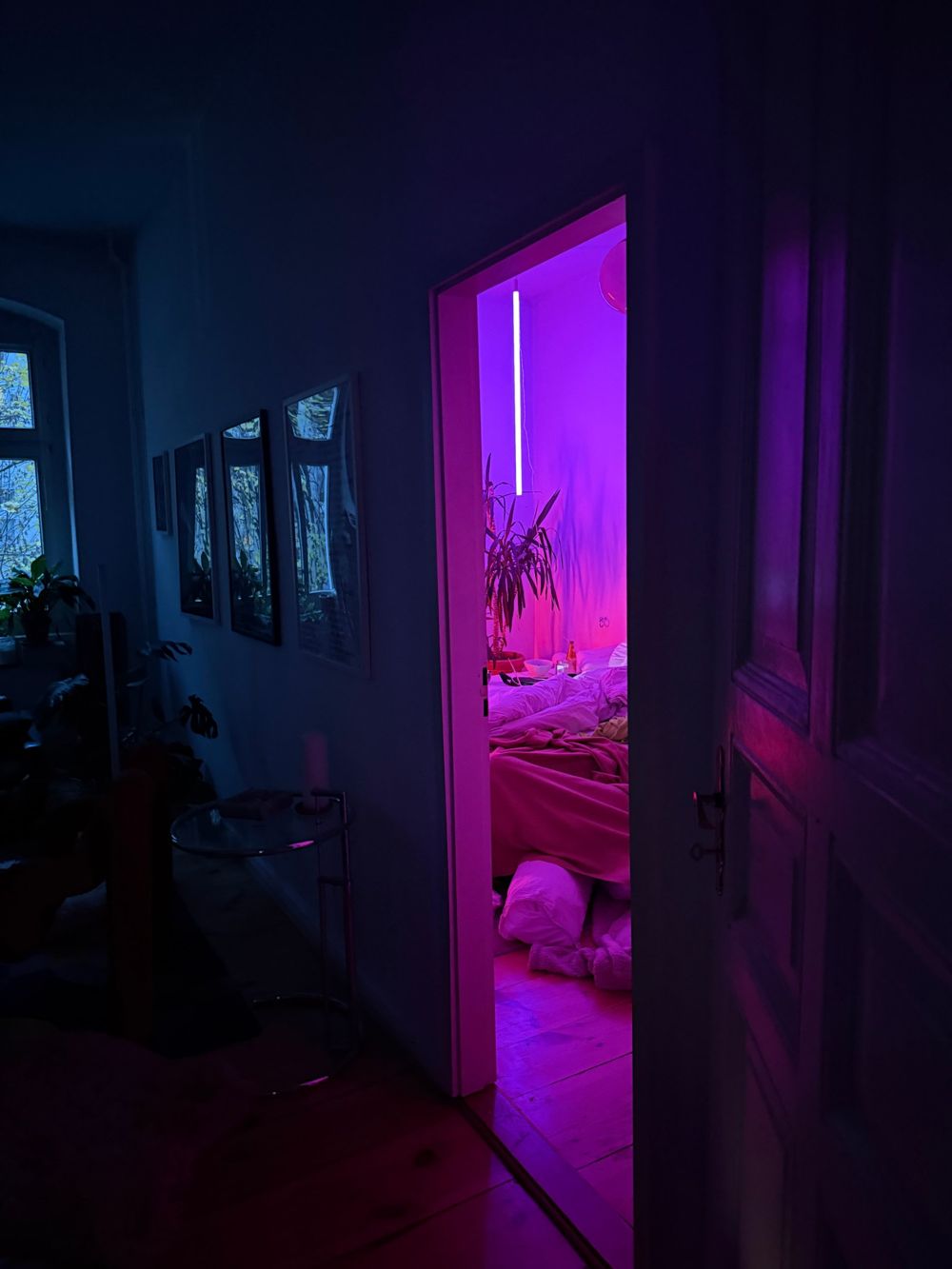
A few light tubes and the room becomes somewhere else.
Light is the fastest way to change how a room feels, and the cheapest. With a smart home it does it by itself: it comes on when you walk in, wakes up warm, goes bright when you work and low at night. Set up well, it takes an afternoon and you never touch a switch again.
/what he does/
What he does
For homes, offices, bars, clubs and events. One room or the whole place.
01Concept and atmosphereWhat the room is for, and how it should feel at nine in the morning and at three at night. Then everything else is built to give it that atmosphere.
02Layout and furnitureWhere things go, what stays, what leaves, and the one piece that should not fit but does.
03LightThe fastest way to change a room. Usually the first thing he touches.
04Smart homeSetup and planning. Light that comes on when you get home and shifts through the day, sound in every room, all of it run from your phone. Done right it is cheap and works first time.
05SoundHe is a DJ, so a room has to sound good. He works with soundproofing and sound isolation, so the room sounds right inside and the neighbours stay friends.
06Build and fixHe is an engineer, so he also builds it. He calls that part #benjifix.
/how/
First he asks how you want to feel
Not which style you like. Four plain questions, and the room comes out of the answers.
1pleasureDo you want to stay?
The only test that counts. People walk towards rooms that feel good and away from rooms that do not. So he asks about the room you never want to leave, and the one you avoid.
2arousalHow awake should it make you?
Light, colour, sound and the amount of stuff all turn a room up or down. A bedroom and a bar sit at opposite ends. He finds your number.
3controlWho is in charge, you or the room?
A dimmer. A door you can close. A chair you can drag across the floor. A room feels better when you are the one running it, which is why his rooms can be moved around.
4prospectWhere do you sit, and what do you see?
People tend to pick the seat with a view: over the room, to the door, out of a window. He finds that seat first and builds out from it.
swipe sideways for more →
Borrowed from environmental psychology. Pleasure, arousal and control are the three things Mehrabian and Russell measured rooms by in 1974. The seat with a view is Appleton's prospect and refuge, 1975.
/mix a room/
Mix a room
Question two, as a game. He mixes rooms the way he mixes records: pick a room, then push the faders. Turn the sound on if you want to hear it.
/films/
He makes films too
Two films for Campbell. A film is a space as well, it is just flatter.
/call/
Show him your space
Start with a video call. Walk around with your phone. He looks, asks his four questions and tells you what he would do with it.